
Zone 2 運動 Zone 2 Exercise
Zone 2 運動是一種中等強度的有氧訓練,通常定義為最大心率(max HR)的 60-70%。 這個區域常被稱為「脂肪燃燒區」,因為它能優化身體使用脂肪作為燃料,同時建立耐力而不造成過度負擔。 要估計最大心率,使用公式 220 減去你的年齡,不過更準確的方法如實驗室測試或感知用力程度可以精煉它。 在這個強度下,你應該能夠維持對話,但很難唱歌或說長句。
Zone 2 exercise is a form of aerobic training performed at a moderate intensity, typically defined as 60-70% of your maximum heart rate (max HR). This zone is often called the "fat-burning zone" because it optimizes the body's use of fat as fuel while building endurance without excessive strain. To estimate your max HR, use the formula 220 minus your age, though more accurate methods like lab testing or perceived exertion can refine it. At this intensity, you should be able to hold a conversation but find it challenging to sing or speak in long sentences.
執行 Zone 2 運動的方法 Methods to Perform Zone 2 Exercise
- 計算你的區域:確定最大心率的 60-70%(例如,40 歲的人最大心率約 180 bpm,因此 Zone 2 為 108-126 bpm)。
- 活動:包括穩態有氧運動,如快走、慢跑、騎自行車、游泳或划船。專注維持節奏而不推入更高區域。
- 持續時間與頻率:每次會話目標 30-60 分鐘,每週 3-5 次。如果你新手,請逐步開始以避免過度用力。
- 監測:使用心率監測器、健身追蹤器或「說話測試」來保持在區域內。
- Calculate Your Zone: Determine 60-70% of max HR (e.g., for a 40-year-old, max HR ≈ 180 bpm, so Zone 2 is 108-126 bpm).
- Activities: Include steady-state cardio like brisk walking, slow jogging, cycling, swimming, or rowing. Focus on maintaining the pace without pushing into higher zones.
- Duration and Frequency: Aim for 30-60 minutes per session, 3-5 times per week. Start gradually if you're new to exercise to avoid overexertion.
- Monitoring: Use a heart rate monitor, fitness tracker, or the "talk test" to stay in zone.
這裡是心率區域的視覺表示,以幫助識別 Zone 2
Here's a visual representation of heart rate zones to help identify Zone 2:
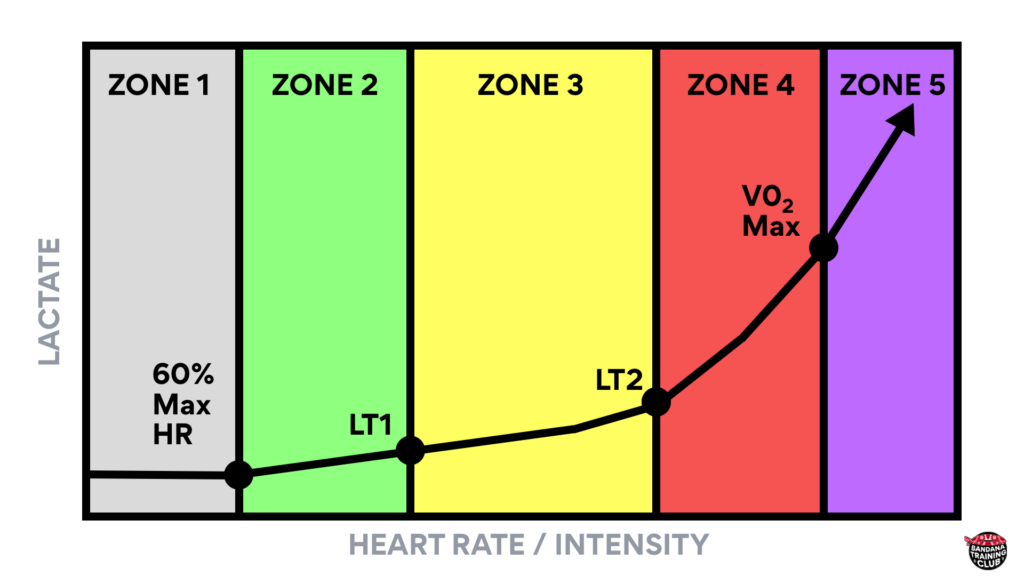
Understanding Heart Rate Training Zones, V02 Max, & Lactate Threshold
Zone 2 運動的益處 Benefits of Zone 2 Exercise
- 提升脂肪利用與代謝健康:訓練身體更有效地燃燒脂肪,改善代謝靈活性並減少內臟脂肪積累,這對脂肪肝等狀況至關重要。
- 改善耐力與線粒體功能:建立強大的有氧基礎,增加線粒體密度以提升能量產生,並在日常活動或運動中維持表現。
- 心血管與整體健康:強化心臟、降低血壓,並透過提升胰島素敏感性來減少糖尿病風險,同時最小化高強度訓練的傷害。
- 恢復與長壽:允許更高的訓練量而疲勞較少,支持肌肉維持與長期健身收益。
- Enhanced Fat Utilization and Metabolic Health: It trains your body to burn fat more efficiently, improving metabolic flexibility and reducing visceral fat accumulation, which is key for conditions like fatty liver.
- Improved Endurance and Mitochondrial Function: Builds a strong aerobic base, increasing mitochondrial density for better energy production and sustained performance in daily activities or sports.
- Cardiovascular and Overall Health: Strengthens the heart, lowers blood pressure, and reduces diabetes risk by enhancing insulin sensitivity, all while minimizing injury from high-intensity workouts.
- Recovery and Longevity: Allows for higher training volumes with less fatigue, supporting muscle preservation and long-term fitness gains.
間歇性斷食 Intermittent Fasting
間歇性斷食(IF)是一種進食模式,在進食期與斷食期之間交替,重點在於「何時」進食而非「吃什麼」。 它不是飲食,而是一種時間策略,能與身體自然節奏對齊,促進代謝轉變,如在斷食期間從葡萄糖轉向脂肪燃燒。
Intermittent fasting (IF) is an eating pattern that alternates between periods of food intake and fasting, focusing on when you eat rather than what you eat. It's not a diet but a timing strategy that can align with your body's natural rhythms, promoting metabolic shifts like switching from glucose to fat burning during fasts.
間歇性斷食的方法 Methods of Intermittent Fasting
常見方法包括 Common approaches include:
- 時間限制進食(例如 16/8 或 14/10):斷食 16 小時並在 8 小時窗口內進食(例如中午 12 點到晚上 8 點),或較溫和的 14 小時斷食與 10 小時窗口。這適合新手,常涉及跳過早餐或晚餐。
- 5:2 飲食:5 天正常進食,2 天非連續日限制熱量至 500-600 卡。
- Eat-Stop-Eat:每週 1-2 次完整 24 小時斷食,其他時間正常進食。
- 交替日斷食:在完整斷食日(無熱量)與無限制進食日之間交替,不過修改版允許斷食日有限熱量。 在進食窗口內,優先營養密集食物;在斷食期間,保持水分補給,如水、茶或黑咖啡。
- Time-Restricted Eating (e.g., 16/8 or 14/10): Fast for 16 hours and eat within an 8-hour window (e.g., 12 PM to 8 PM), or a milder 14-hour fast with a 10-hour window. This is beginner-friendly and often involves skipping breakfast or dinner.
- 5:2 Diet: Eat normally for 5 days and restrict calories to 500-600 on 2 non-consecutive days.
- Eat-Stop-Eat: Involves a full 24-hour fast 1-2 times per week, with normal eating otherwise.
- Alternate-Day Fasting: Alternate between full fasting days (no calories) and unrestricted eating days, though modified versions allow limited calories on fast days.During eating windows, prioritize nutrient-dense foods; stay hydrated with water, tea, or black coffee during fasts.
這張資訊圖說明了流行的间歇性断食時間表 This infographic illustrates popular IF schedules:
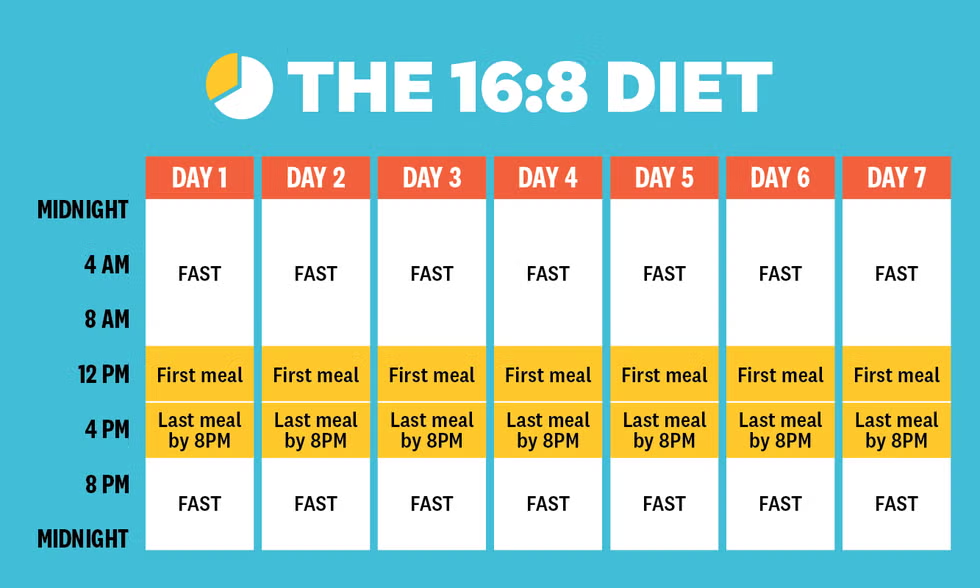
Intermittent Fasting Schedule: Nutritionists Explain 6 IF Diets
間歇性斷食的益處 Benefits of Intermittent Fasting
- 減重與減脂:自然減少整體熱量攝取,提升代謝,並針對內臟脂肪,透過增強脂肪動員來幫助改善脂肪肝。
- 代謝與胰島素健康:改善胰島素敏感性、降低血糖,並可能減少糖尿病風險,透過斷食期間允許身體修復細胞(自噬)。
- 細胞與長期健康:透過減少炎症、改善心臟健康並可能降低癌症風險來促進長壽,雖然需要更多研究。
- 簡單與可持續性:比持續熱量計算更容易遵循,一旦適應後,還帶來額外益處如改善專注力和能量。
- Weight Loss and Fat Reduction: Reduces overall calorie intake naturally, boosts metabolism, and targets visceral fat, aiding in fatty liver improvement by enhancing fat mobilization.
- Metabolic and Insulin Health: Improves insulin sensitivity, lowers blood sugar, and may reduce diabetes risk by allowing the body to repair cells during fasts (autophagy).
- Cellular and Long-Term Health: Promotes longevity through reduced inflammation, better heart health, and potential cancer risk reduction, though more research is needed.
- Simplicity and Sustainability: Easier to follow than constant calorie counting, with added benefits like improved focus and energy once adapted.
將 Zone 2 運動與 IF 結合,能放大益處如減脂與代謝效率,但開始前請諮詢醫療專業人士,尤其是如果你有潛在疾病。 Combining Zone 2 exercise with IF can amplify benefits like fat loss and metabolic efficiency, but consult a healthcare professional before starting, especially if you have underlying conditions.

No comments:
Post a Comment
Enjoy this post? What do you like about this?